July and August Visits
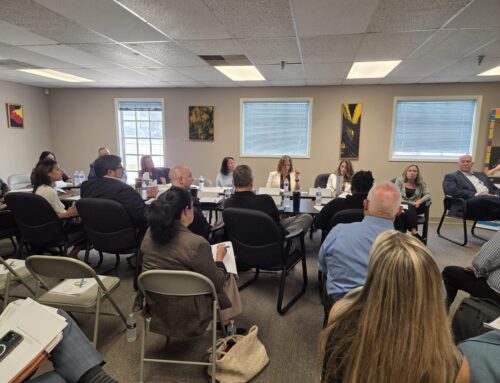
Jaime Zahid, Training and Consultant Specialist for The BOGGS Center for Developmental Disabilities, joined the July meeting of the SCA. Jaime shared her professional experience and that her training includes PCPT, outcomes writing, HCBS and employment. Jaime was curious to hear the SCs updates on what goes on day to day. She explained how outcomes need to be singular and not disability based. That the best written outcomes are those that are borne over time, after an SC and the individual take the time to get to know each other and to frame them not as pass/fail but as good/better/best. The discussion also focused on PCPT which take a lot of time and are very detailed; how to get the PCPT to be better positioned to be read by providers. Jaime mentioned that in some states the ISP and PCPT are one document. Jamie agreed to return to the SCA if she had information to share or questions to ask.
Josephine Shenouda, Executive Director of the Early Intervention System in DOH joined the July meeting of the EIPA to answer various administrative questions and policy concerns. Much of the meeting was spent on ideas for developing a professional talent pipeline and the need to partner with higher education. In addition to curriculums which do not expose students to pediatrics, many students are advised by their professors not to go into EI right out of school because they will not get the support they need. One EIPA member shared that in NY, SUNY Downstate has a special training which is an outgrowth of a close relationship they have with the NY department. EIPA is pleased to be part of the conversation to help stop and turn around the erosion of the workforce.
Maura Sanders, Esq. and Cassandra Stabbert of Legal Services of New Jersey (LSNJ) met with the CFOO Forum to talk and answer questions about SNAP for people with disabilities. Currently 28% of the 836,000 people in NJ enrolled in SNAP are disabled. Maura provided an overview of SNAP, information about the new chip cards to prevent people from losing their entitlements, how “disability” s defined, special eligibility rules for people with disabilities, why a person living in a group home is consider a “Household of 1” under SNAP (this is a good thing), automatic enrollment in SNAP as an SSI beneficiary, 2 separate payments/ month (the first is federal, the second is state. Together they add up to $95), eligibility from the day one applies, reasonable accommodation and meaningful access. On a statewide level, advocates are working to improve the verification process, improve in person access and expanded hours, and on a waiver to permit people with disabilities to buy more hot/prepared food. Federally, advocacy efforts focus on lifting the cap on housing, standardizing the medical exception and preventing the majority in the House from changing the waiver back to what it was in the 60’s.
LSNJ provides important services to people with low incomes living in the state of NJ which includes both individual and targeted advocacy with the government. We thank Maura and Cassandra for all their work to ensure access to entitlements and services for those most in need. To find out more about LSNJ access their website at www.LSNJLAW.com
Solomon Okonkwo and Renee Caratozzolo, NJ Project /SEARCH Liaison in Division of Vocational Rehabilitation Services in the Department of Labor met with ABCD Day and Support Program Directors and Support Coordinators to talk and answer questions about Project/SEARCH. The goal of Project/ Search is to prepare young people with significant disabilities for success in competitive integrated employment. Project/SEARCH was developed at Cincinnati Children’s Hospital Medical Center in 1996; because the hospital served individuals with developmental disabilities, it made sense that they should commit to hiring people in this group to fill some of the high- turnover, entry-level positions. Today, Project SEARCH is an international network of sites.
The program provides real-life work experience combined with training in employability and independent-living skills to help young people with significant disabilities make successful transitions to productive adult life. The Project SEARCH model involves an extensive period of skills training and career exploration, innovative adaptations, long-term job coaching, and continuous feedback from teachers, skills trainers, and employers. At the completion of the training program, students are employed in nontraditional, complex and rewarding jobs. Typically, the young people in the program are high school students who are on an Individual Education Program (IEP) and in their last year of high school eligibility, but the program can also be adapted to serve out-of-school youth and young adults who are beyond school age. We look forward to working with Solo and Renee to help individuals achieve their goal of competitive employment.